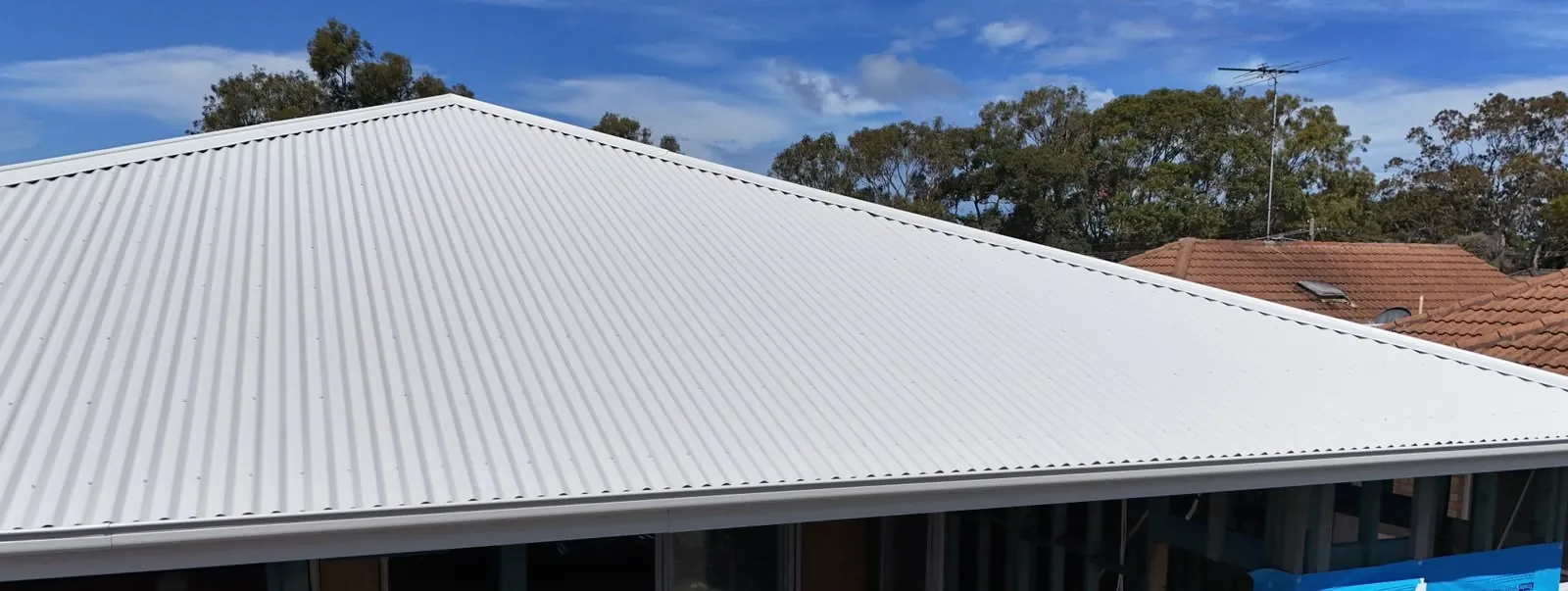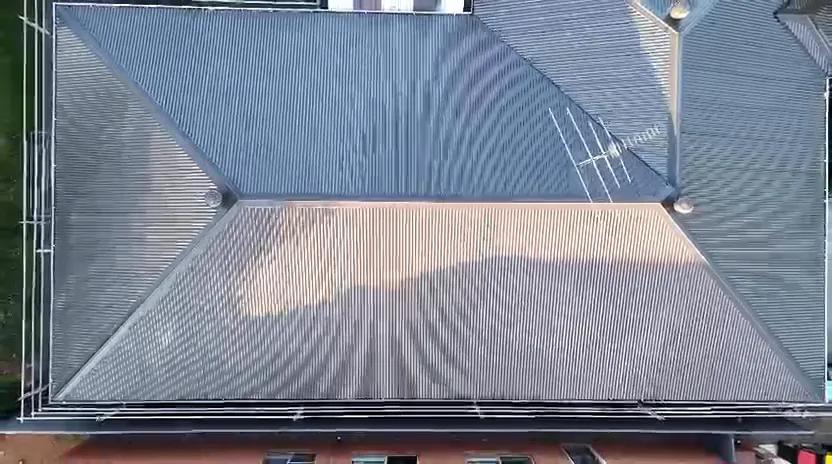
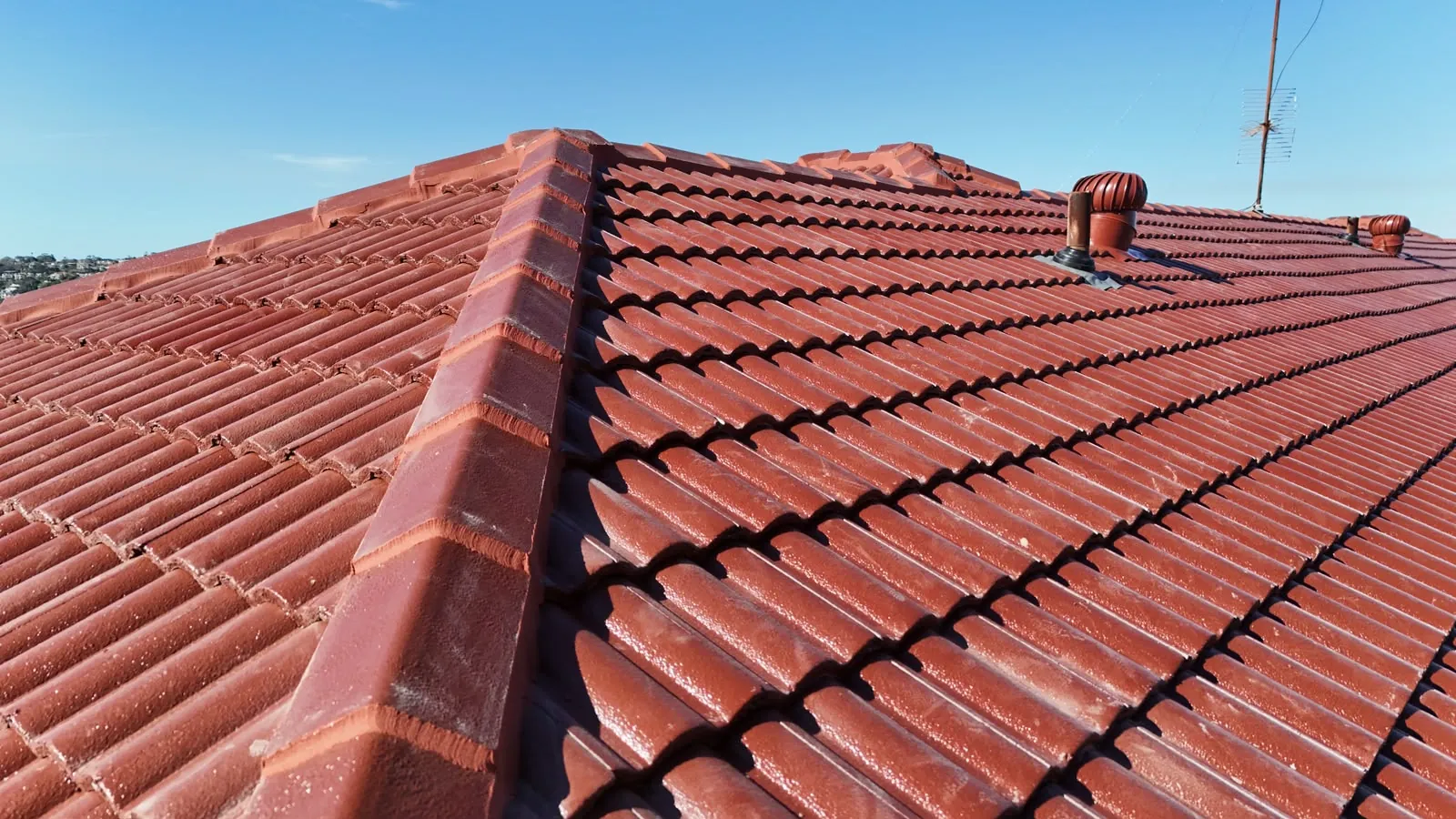
A roof doesn't wear out uniformly. It fails at the joints, the transitions, the details, and the specific failures depend on which part of Sydney it lives in. Here's the field guide to what wears out first and why.
UV: the constant background killer
Sydney gets serious UV. Concrete tile paint, Colorbond paint, sealants, gutter guard plastics: all of them are on a clock the moment they're installed. The specific failures:
- Concrete tile paint fades and chalks after 15 to 20 years. A maintenance re-paint restores it.
- Colorbond paint fades a small amount over decades. The modern coatings are impressively UV-stable.
- Silicone sealants around penetrations perish and shrink in 8 to 12 years, one of the most common leak causes on 15+ year-old roofs.
- Plastic gutter guard turns brittle and shatters at the mesh edges in 3 to 5 years, one reason we only install aluminium mesh.
Salt: the coastal specialist
Salt air causes different damage depending on the material:
- Standard Colorbond corrodes at cut edges and fixing points within 1km of the coast. Pinhole rust after 15 years is typical.
- Colorbond Ultra (marine-grade) handles the same exposure for 25+ years, worth the small premium for coastal properties.
- Ridge cap mortar dissolves faster in salt air. Re-pointing intervals drop from 20 years to 12 to 15 years on coastal properties.
- Steel gutter brackets and downpipe fixings rust out. Stainless replacements are worth the small extra cost.
Southerly busters: the acute event
The classic Sydney summer southerly change brings horizontal rain driven at 60-100km/h. This finds any weakness in the west or south-facing side of the roof:
- Lifted or under-fixed ridge caps get pushed off, one of the most common post-storm repair calls.
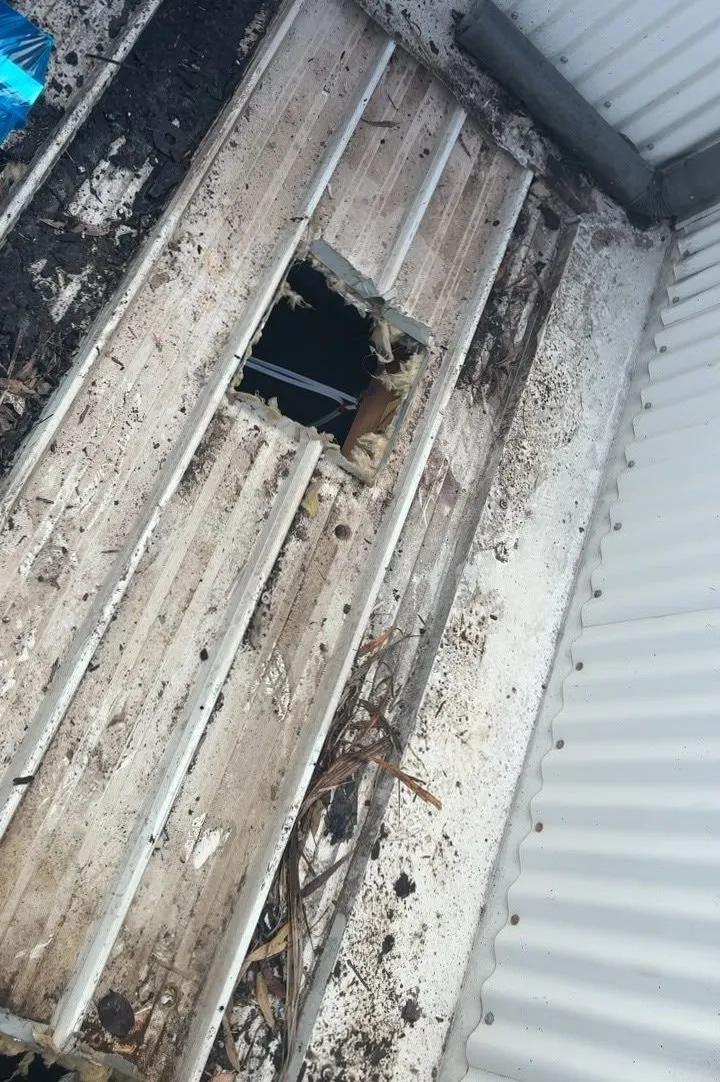
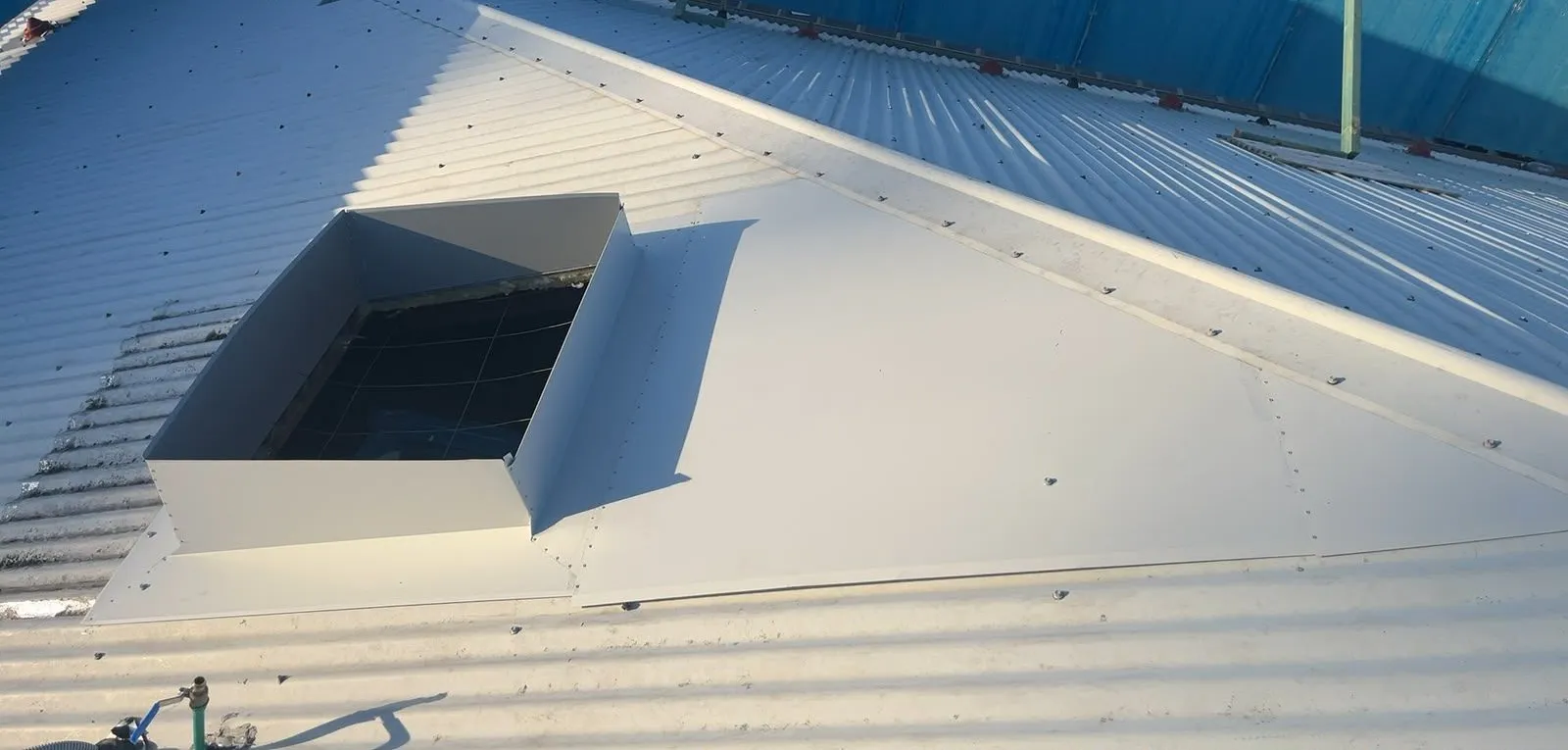
- Perished flashings around chimneys, skylights and vents leak instantly under horizontal rain.
- Overflowing gutters (from bad fall or blocked outlets) drive water back under the roof edge.
- Cracked or slipping tiles are pushed further out of place, accelerating the failure.
Hail: the roulette wheel
Sydney gets a serious hail event every few years: 2018 in the eastern suburbs, and various events through the Hills and Western Sydney. The damage pattern:
- Concrete tiles crack under 3cm+ hail, often not visibly, but leaks appear at the next storm.
- Terracotta tiles shatter more easily than concrete but the damage is visible immediately.
- Colorbond dents cosmetically but rarely fails structurally from even large hail.
- Skylights, solar panels and roof-mounted air conditioning are usually the first casualties.
Tree litter: the slow strangler
Gum leaves, jacaranda blossoms, paperbark shed and fig fruits all end up in gutters. Left in place, they:
- Block gutter outlets, causing overflow into wall cavities.
- Hold moisture against the roof edge, rotting timber fascias and eaves.
- Break down into a fertile compost, feeding grass and moss growth in the gutters.
- Provide fuel load for ember-driven bushfire ignition in interface areas.
So which one gets your roof first?
Depends where you live. Coastal: salt-driven corrosion of Colorbond details and mortar. Inner-west heritage: flashing perishing and ridge cap failure from age plus southerly-buster exposure. Hills District: hail and complex-geometry pointing failures. Western Sydney: UV degradation of tile paint plus occasional major hail. Bushland-interface: tree litter plus fire risk.
The good news is all of it is predictable and manageable with a bit of scheduled attention. Roofs that fail early almost always failed because nobody was looking. Roofs that hit their full lifespan almost always had someone paying attention every few years.